
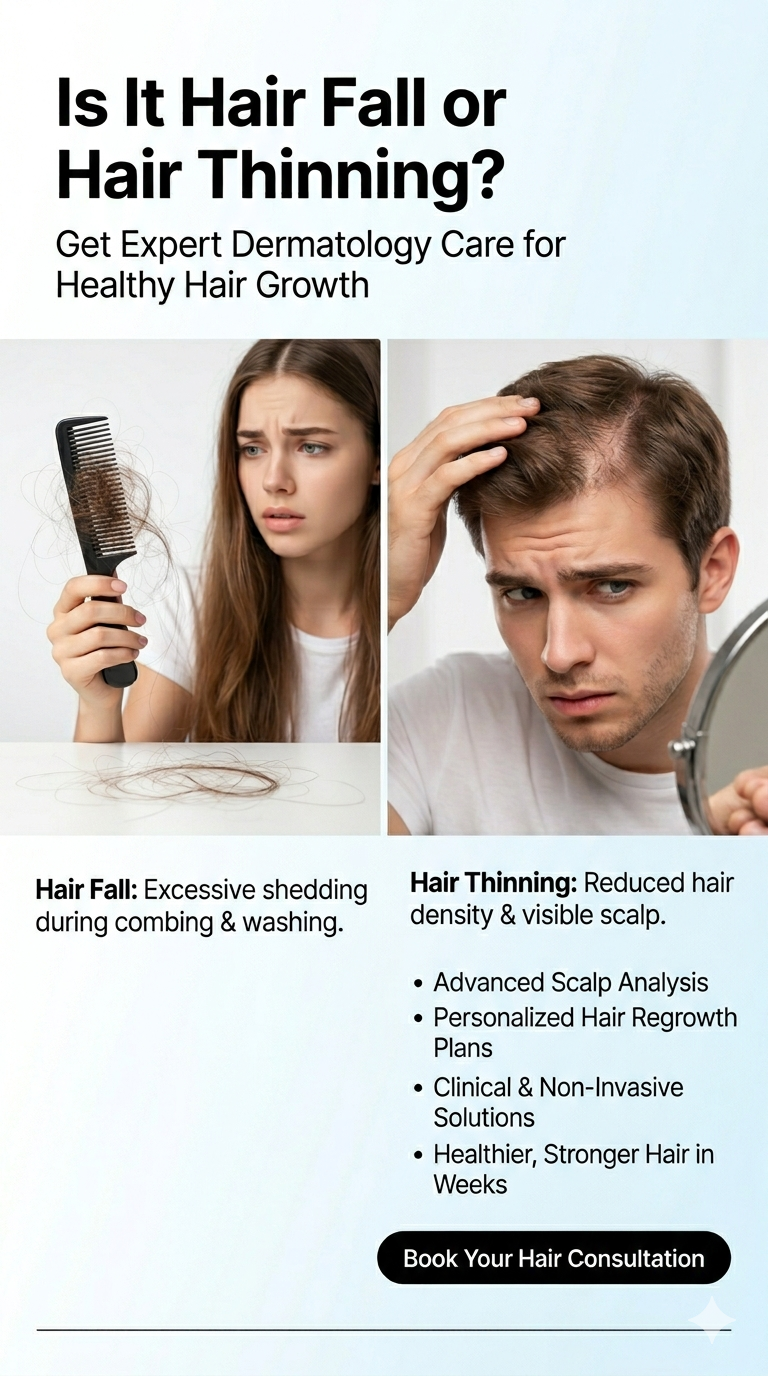
Hair problems are one of the most common concerns among teenagers and young adults today. But here’s the confusion—most people use the terms hair fall and hair thinning interchangeably.
The truth? They are not the same.
Understanding hair fall vs hair thinning – what’s the difference is the first step toward choosing the right treatment and preventing long-term hair damage.
🤔 Hair Fall vs Hair Thinning – What’s the Difference?
Let’s simplify it:
- Hair Fall: Shedding of hair strands from the scalp
- Hair Thinning: Reduction in hair volume and density over time
👉 Both are related—but they have different causes, patterns, and treatments.
🚿 What Is Hair Fall?
Hair fall refers to excessive shedding of hair strands.
🔍 Normal vs Excess Hair Fall:
- Normal: 50–100 strands per day
- Excess: More than 100 strands daily
❗ Common Causes:
- Stress
- Poor diet
- Hormonal imbalance
- Illness or medication
- Seasonal changes
👉 Temporary hair fall is common, but persistent shedding needs attention.
📉 What Is Hair Thinning?
Hair thinning is when your hair gradually becomes:
- Less dense
- Finer in texture
- More scalp-visible
Unlike hair fall, this is usually progressive and long-term.
❗ Common Causes:
- Genetics (pattern baldness)
- Hormonal changes (PCOS, thyroid)
- Nutritional deficiencies
- Aging
👉 This is where many people ignore early signs—until it becomes noticeable.
⚠️ Hair Fall vs Hair Thinning – Key Differences
| Factor | Hair Fall | Hair Thinning |
| Nature | Sudden shedding | Gradual volume loss |
| Duration | Often temporary | Long-term |
| Visibility | Hair on pillow/shower | Visible scalp |
| Cause | Stress, diet, illness | Genetics, hormones |
| Treatment | Lifestyle + medical | Advanced dermatology care |
👉 Knowing hair fall vs hair thinning – what’s the difference helps avoid wrong treatments.
🚨 When Should You Worry?
You should consult a specialist if:
- Hair fall lasts more than 4–6 weeks
- You notice widening parting or scalp visibility
- Hairline is receding
- Hair volume has significantly reduced
👉 These are signs that your condition may be progressing from hair fall to thinning.
⚠️ Before: Common Mistakes People Make
❗ Mistakes:
- Using random oils and shampoos
- Following social media remedies
- Ignoring early signs
- Delaying professional consultation
👉 These mistakes often worsen the problem.
🏥 Expert Hair Care at Dermatrixx
👉 Dermatrixx offers advanced, science-backed hair treatments with personalized care to target the root cause of your hair concerns.
At Dermatrixx, treatment includes:
- Scalp analysis
- Identifying root cause (hormones, nutrition, genetics)
- Customized treatment plans
- Advanced dermatology procedures
If you’re searching for a trusted dermatologist in Sonipat, Dermatrixx provides effective solutions for both hair fall and thinning.
💙 After: What Happens with the Right Treatment?
With proper diagnosis and care:
- Hair fall reduces significantly
- Hair density improves
- Scalp health restores
- Confidence returns
👉 The earlier you act, the better your results.
🧠 How to Reduce Hair Fall Naturally
- Eat a protein-rich diet
- Manage stress
- Avoid excessive heat styling
- Maintain scalp hygiene
- Follow expert advice
👉 These steps support treatment but don’t replace medical care.
🚨 Don’t Ignore Early Signs
Hair problems don’t fix themselves.
👉 If you’re confused about hair fall vs hair thinning – what’s the difference, it’s time to get clarity.
Book a consultation at Dermatrixx and get a personalized hair treatment plan today.
❓ FAQs – Hair Fall vs Hair Thinning
❓ Is hair fall the same as hair thinning?
No, hair fall is shedding, while thinning is reduced hair density.
❓ Can hair thinning be reversed?
In many cases, yes—if treated early with proper medical care.
❓ How do I know if I have hair thinning?
Look for reduced volume, visible scalp, or widening hair part.
❓ Can diet cause hair fall?
Yes, poor nutrition is a major cause of hair fall.
❓ When should I see a dermatologist?
If hair fall is excessive or hair thinning is visible, consult immediately.